What Should AI Remember, and What Should It Forget?
What Should AI Remember, and What Should It Forget?
Understand AI models and tools, their uses and limitations.
What Should AI Remember, and What Should It Forget?
An AI tool timeout does not prove an operation failed. Learn how idempotency, result checks and per-target records help recover interrupted tasks.
More context does not guarantee better answers. Organize goals, evidence and task state, preserve uncertainty in summaries, and evaluate handoffs with controlled comparisons.
OpenAI's GPT-6.1 Terra: positioning, specs, API pricing (half of Sol), ChatGPT and Codex availability, benchmarks, migration pitfalls, and when to pick it over Claude Opus 5.5.
Building a React Native + Expo app from scratch with Claude Code and Opus 5.5: three rejected UIs, dropping uni-app x and Lynx, adb device testing, OTA updates and a HarmonyOS build.
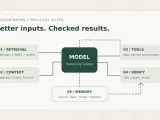
Missing documents, forgotten requirements and unfinished work: a practical look at hybrid retrieval, context, inference budgets, agent verification and long-term memory.
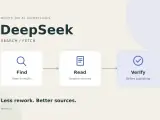
DeepSeek Search and Fetch fit into a writing workflow. What matters to me is reading the sources, checking the facts and saving time all the way through revision.
ChatGPT's parallel agents, Cursor's cloud environments, Gemini's Minecraft team and Claude's quantum circuits: what I'd want before using them in my own projects.
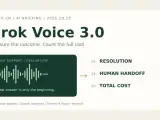
Grok Voice 3.0 claims 70% autonomous resolution of Starlink support calls. Resolution, handoffs and costs, plus OpenAI adoption data and Argon research.
Where Gemini 4 Argon fits: engineering, documents and agents, with access requirements, shared context limits, introductory pricing and a practical trial.
Gemini 4 Argon, Anthropic’s source control, LangSmith AI Search and three quick updates, with practical terminology and source posts.
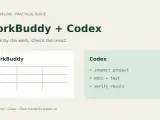
A practical guide to office files, code projects, better task instructions, handoffs and the real cost of using WorkBuddy and Codex.
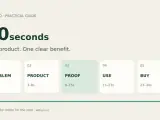
Pick a model for product photos, reference-driven shots, real-footage edits or audio. Includes a 30-second shot plan and a practical API budget example.
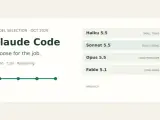
Choose between Sonnet 5.5, Opus 5.5, Haiku 5.5 and Fable 5.1 by the work you need done, with current API prices, context tiers, effort and caching costs.
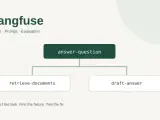
Instrument a small RAG workflow with Python SDK v4, connect traces to prompt versions and evaluations, and understand self-hosting, masking and real task costs.
What Gemini Spark’s Tasks, Skills and Schedules do, how background execution works, who can access it, and which everyday workflows are worth trying first.
Anthropic reports unintended actions during Claude evaluations and internal use. Lessons for agent permissions, stopping rules and reliable automation.
GPT-6.1 Sol is cheaper: $2/$10 per million input/output tokens vs $4/$20 for GPT-5.6 Sol, cached input 75% lower. Speed tiers, task costs and when to switch.
Choose between Seedance, Runway, Google and Wan by the shot you need. Reduce retries and keep real footage for reporting on vehicles and driving features.
A dated comparison of GPT, Claude, Gemini, DeepSeek and Qwen: inputs, tools, API costs and limits, with practical criteria for writing, coding and analysis.