
AI, Electric Vehicles, Autonomous Driving and Smart Home: Guides and Articles
Practical guides to AI models, electric vehicles, Matter and Bluetooth Mesh smart home gateways, and web development.
AI video beginner’s guide →

Home Assistant Says “Run Successful.” Why Is the Light Still Off?
Home Assistant Says “Run Successful.” Why Is the Light Still Off?

What Should AI Remember, and What Should It Forget?
What Should AI Remember, and What Should It Forget?

AI Says “Execution Failed.” Why Not Just Try Again?
An AI tool timeout does not prove an operation failed. Learn how idempotency, result checks and per-target records help recover interrupted tasks.

A Successful Home Assistant Backup: Will It Restore on Another Machine?
A successful Home Assistant backup does not prove full recovery. Check included data, encryption keys, external databases, radios and real-device validation.

Why Can’t Matter Devices Connect When They’re on Guest Wi-Fi?
Internet access does not prove local Matter connectivity. Diagnose guest Wi-Fi isolation, mDNS, IPv6 routing and Thread border router paths step by step.

Does Giving AI More Context Always Lead to Better Answers?
More context does not guarantee better answers. Organize goals, evidence and task state, preserve uncertainty in summaries, and evaluate handoffs with controlled comparisons.

Two Thread Border Routers at Home: Will Your Devices Be More Reliable?
Two Thread border routers do not necessarily share one network. Understand credentials, Matter fabrics and outage tests before expecting better coverage or redundancy.

Getting Started with Silicon Labs BGAPI: How Can a Linux Host Control a Bluetooth Mesh Module over UART?
Connect a Linux host to Silicon Labs Bluetooth Mesh NCP: align firmware and XAPI, check UART flow control and boot events, then distinguish node and provisioner roles.

How Does the Fleetd Client Update? Signature Verification, Version Checks, and Failure Recovery
How Fleetd v0.3.0 checks signed releases, architecture and versions, tests new binaries and replaces agents, with the limits of manual recovery explained.

The Person Is Still There, but the Light Goes Out: Why Does Automatic Lighting Keep Getting It Wrong?
Why do smart lights turn off while someone is still in the room? Diagnose motion sensing, stale delays, automation modes, manual overrides and restart behavior.

Why Does a Smart Light Go Offline When You Press the Wall Switch? First, Distinguish Cutting Power from Turning Off the Light
Why does a smart bulb go offline when you use the wall switch? Compare cutting power with turning off the light, and choose compatible bulbs and controls.

After Connecting to Matter, Why Do Some Features Disappear?
Why do features disappear after pairing with Matter? Understand device, bridge and platform support with Hue, Home Assistant and Google Home examples and a checklist.

Can Matter Still Work When the Internet Goes Down? Look Separately at Local Control, Remote Access, and Automations
Does Matter work without internet? Separate local control, remote access and automation dependencies, with a practical offline test checklist.

How Can One Matter Device Connect to Two Smart Home Platforms?
Add one Matter device to two smart home platforms: fabrics, Multi-Admin, sharing, automation conflicts and removing a controller.

What’s New in Matter 1.6.1? From Group Lighting Control to Muting the Doorbell
Explore Matter 1.6.1 Groupcast, chime controls and SDK fixes. Separate specification changes from product support, with checks for Matter bridges.
Why Does Matter Use IPv6? Will It Work If IPv6 Isn’t Enabled at Home?
Matter needs local IPv6, not necessarily IPv6 internet service. Understand Thread border routers, discovery, access control and five practical network checks.

Why Can Adding More Bluetooth Mesh Relays Make the Network Slower?
More relays do not always mean better reliability. Separate coverage gaps from excess traffic, then test relay placement, TTL, retransmissions and application retries.

Bluetooth Mesh Group Control: One Light Stayed Off—Should You Resend to Everyone?
One light missed a group command: distinguish sender acceptance, model state and physical light before retrying. Includes a troubleshooting checklist.

Bluetooth Mesh Battery Devices: Why Can They Report Promptly but Not Receive Control Immediately?
Why can a battery Mesh node report promptly while remote settings wait? Compare LPN transmission and Friend polling, then check power use, queues and recovery.
How to Choose Bluetooth Mesh: Validate the Design with a Lighting Acceptance Checklist
Choose a Bluetooth Mesh implementation by validating offline control, group response, state consistency and recovery with a practical lighting acceptance checklist.
Supports SIG Mesh, but Cannot Join Mi Home? Xiaomi Mesh Product Identity and Integration Boundaries
Why SIG Mesh support does not guarantee Mi Home integration: product identity, MIoT mapping, template versions, asynchronous gateway replies and state caching.
Bluetooth Mesh Provisioning Succeeded—Why Won’t the Light Respond?
Follow Bluetooth Mesh from provisioning to usable control: NetKey, AppKey, DevKey, model binding, unicast, publish/subscribe, state feedback and recovery.
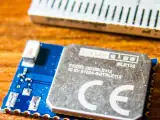
From Custom Bluetooth Broadcasts to Mesh: What Multihop Networking Requires
Designing custom Bluetooth Mesh: message identity, bounded relaying, duplicates, acknowledgements, retries, power-loss security and fault testing.
Custom Mesh, SIG Mesh and Xiaomi Mesh: How They Relate
Understand custom Bluetooth Mesh, SIG Mesh and Xiaomi Mesh: networking, security, device models, Xiaomi Home integration, offline control and practical interoperability.

Making Monitoring Alerts Useful: Fleetd Triggers, Recovery and Delivery
How Fleetd v0.3.0 evaluates sustained load, offline reports and slow metrics, resolves alerts and deduplicates email—with clear delivery and data-quality limits.

One Go Agent on Linux and OpenWrt: Fleetd Deployment Choices
How Fleetd v0.3.0 shares an agent across Linux and OpenWrt: amd64/arm64, systemd/procd, persistent state, firmware recovery and monitoring dependencies.
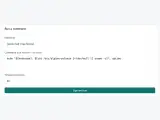
Why Sign Remote Commands in the Browser? Fleetd Authorization and Trust Boundaries
How Fleetd v0.3.0 signs remote commands with Ed25519, binds targets, prevents replay and enforces local permissions—and where browser and terminal trust ends.
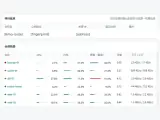
Connecting Routers Behind NAT: Fleetd Agent Enrollment, Approval and Reconnection
How Fleetd v0.3.0 connects Linux and OpenWrt agents behind NAT: outbound WebSockets, pinned keys, fingerprint approval, retry policies and device removal.
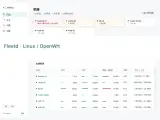
Introducing Fleetd: Open-Source Management for Linux Servers and Routers
Meet Fleetd, a self-hosted dashboard for Linux servers and OpenWrt routers: monitoring, outbound agents, signed commands, local permissions and a Docker Compose walkthrough.
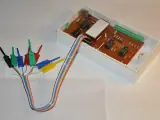
Testing a Matter Gateway: From UART Responses to Apple Home State Synchronization
A first-round acceptance plan for a Bluetooth Mesh–Matter gateway: distinguish API success from device execution, verify state feedback, and test outage and restart recovery.
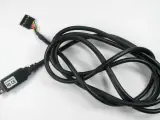
Choosing Matter Gateway Development Boards: A Hardware and Validation Checklist
A practical purchasing and validation checklist for Linux boards, Silicon Labs Mesh NCP kits, Telink devices, USB-UART adapters, flow control and recovery.

GPT-6.1 Terra Explained: Pricing, How to Use It, and How It Compares to Claude Opus 5.5
OpenAI's GPT-6.1 Terra: positioning, specs, API pricing (half of Sol), ChatGPT and Codex availability, benchmarks, migration pitfalls, and when to pick it over Claude Opus 5.5.
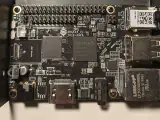
Building the Linux System for a Matter Gateway: RDK X5 SDK and Buildroot in WSL
Compiling the D-Robotics RDK X5 SDK in WSL and baking a Rust gateway into a Buildroot image: cross-compiling, overlays, disabled services, autostart, and the IPv6-off-by-default kernel.

Building a Matter Gateway in Rust: Bridging Devices to Apple Home
A practical rs-matter prototype: endpoints, device mapping, commands, state reports and persistence, with clear limits on hardware validation.

Same Claude Opus 5.5: Why Some People Ship an App and Others Call It Dumb
Building a React Native + Expo app from scratch with Claude Code and Opus 5.5: three rejected UIs, dropping uni-app x and Lynx, adb device testing, OTA updates and a HarmonyOS build.

Matter Gateway Certification: What You Need and What It Costs
Plan Matter Bridge certification, Bluetooth qualification, production attestation and market compliance using a scoped budget, separating recurring, per-design and per-device costs.

Choosing a Matter Gateway Processor: RK3506 vs RK3562 vs RK3576 vs RDK X5
How much performance does a Bluetooth Mesh to Matter gateway need? Rockchip RK3506, RK3562, RK3576 and D-Robotics RDK X5 compared on specs, price, SDK and fit.
Choosing a Bluetooth Mesh Gateway Chip: Telink, Silicon Labs or Nordic?
Compare Telink, Nordic and Silicon Labs gateway approaches through firmware roles, host APIs, capacity evidence and validation, without treating sample settings as hardware limits.
SIG Mesh or a Proprietary Protocol? Connecting Bluetooth Devices to a Gateway
Compare custom advertising, BLE connections and Bluetooth Mesh for a Matter gateway: interoperability conditions, model mapping, capacity planning and ecosystem boundaries.
Test a Matter Bridge with Apple Home Using Only a PC and a Phone
Before the hardware arrived: a Windows PC as the gateway and a phone running nRF Connect as the Bluetooth device, with pairing, control and state sync in Apple Home.

How to Bring Bluetooth Devices into Apple Home with a Matter Bridge
No new chip in every device: one Matter gateway bridges Bluetooth Mesh switches and lights into Apple Home. Our architecture, key choices and next steps.
How I deploy my blog: Chinese on Alibaba Cloud, other languages on Cloudflare
One Astro project, two domains: publishing on Alibaba Cloud and Cloudflare Pages, with working old links, language alternatives and separate Sitemaps.
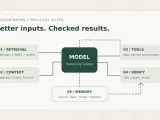
Want smarter AI? Don't rush to change models
Missing documents, forgotten requirements and unfinished work: a practical look at hybrid retrieval, context, inference budgets, agent verification and long-term memory.
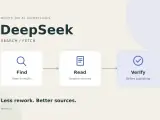
With DeepSeek's update, I want to know whether there will be less rework
DeepSeek Search and Fetch fit into a writing workflow. What matters to me is reading the sources, checking the facts and saving time all the way through revision.

AI is splitting up the work. I'm more interested in who finishes the job
ChatGPT's parallel agents, Cursor's cloud environments, Gemini's Minecraft team and Claude's quantum circuits: what I'd want before using them in my own projects.

The Roadster tempts me. But I'm not putting down RMB 332,000 yet
Who is the new Tesla Roadster for, and why wouldn't I reserve one yet? My take on China's reservation terms, the 2028 production statement and driver assistance.

I Want to Build an E-Ink Dashboard with AI
How I would build an AI-assisted e-ink dashboard: cloud rendering, sensible refresh intervals, stale-data warnings and a small first version.

The More I Develop with AI, the Less I Skip the Process
What improving my own blog taught me about AI development: clear requirements, small changes, meaningful tests and live verification.
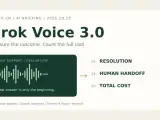
AI Briefing, October 15: Grok Voice 3.0 and the Full Cost of Customer Support
Grok Voice 3.0 claims 70% autonomous resolution of Starlink support calls. Resolution, handoffs and costs, plus OpenAI adoption data and Argon research.

Is Gemini 4 Argon Worth Using? Complex Code, Long Tasks and Real Costs
Where Gemini 4 Argon fits: engineering, documents and agents, with access requirements, shared context limits, introductory pricing and a practical trial.
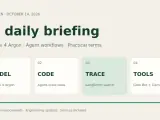
AI Briefing, October 14: Gemini 4 Argon and Changing Agent Workflows
Gemini 4 Argon, Anthropic’s source control, LangSmith AI Search and three quick updates, with practical terminology and source posts.
How I’ve Improved My Blog with GPT, One Step at a Time
How I use GPT for readable pages, multilingual SEO, search submissions and WeChat drafts—and how I check the results.
WorkBuddy or Codex? Choose by the Work You Need Done
A practical guide to office files, code projects, better task instructions, handoffs and the real cost of using WorkBuddy and Codex.
Making a 30-Second Ad: Which AI Video Model Should You Choose?
Pick a model for product photos, reference-driven shots, real-footage edits or audio. Includes a 30-second shot plan and a practical API budget example.
Which Claude Code Model Should You Use? Let’s Talk Tasks and Costs
Choose between Sonnet 5.5, Opus 5.5, Haiku 5.5 and Fable 5.1 by the work you need done, with current API prices, context tiers, effort and caching costs.
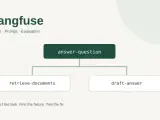
Langfuse in Practice: Make Slow, Expensive and Wrong AI Responses Diagnosable
Instrument a small RAG workflow with Python SDK v4, connect traces to prompt versions and evaluations, and understand self-hosting, masking and real task costs.

Gemini Spark: An Agent That Keeps Working After the Answer
What Gemini Spark’s Tasks, Skills and Schedules do, how background execution works, who can access it, and which everyday workflows are worth trying first.

Claude’s New Report: Capable AI Needs to Know When to Stop
Anthropic reports unintended actions during Claude evaluations and internal use. Lessons for agent permissions, stopping rules and reliable automation.

GPT-6.1 Sol vs 5.6 Sol: Which Is Cheaper and Worth Switching?
GPT-6.1 Sol is cheaper: $2/$10 per million input/output tokens vs $4/$20 for GPT-5.6 Sol, cached input 75% lower. Speed tiers, task costs and when to switch.

AI Video for Beginners, Part 1: Prepare Your First Frame
Start with a photo you took yourself. Choose the aspect ratio, compose a simple scene and plan one movement before generating your first AI video shot.

AI Video for Beginners, Part 2: Generate a Usable Shot
Upload your first frame, describe one camera movement and check the result for distortion and flicker. Improve the shot by changing one condition at a time.

AI Video for Beginners, Part 3: Edit Your First Short Film
Arrange three simple shots, add a readable caption and suitable sound, then check the exported video. Finish your first AI short without elaborate transitions.
Choosing an AI Video Model: Get the Shot Right Before Chasing a Cinematic Look
Choose between Seedance, Runway, Google and Wan by the shot you need. Reduce retries and keep real footage for reporting on vehicles and driving features.
GPT, Claude or Gemini? Comparing Five AI Model Families and Their Costs
A dated comparison of GPT, Claude, Gemini, DeepSeek and Qwen: inputs, tools, API costs and limits, with practical criteria for writing, coding and analysis.

FDE, Part 1: What a Forward Deployed Engineer Does in Enterprise AI
How FDEs connect business needs, enterprise data and software capabilities, with clear responsibilities and delivery boundaries.

FDE, Part 2: Discover AI Requirements and Define Pilot Acceptance
Observe real tasks, review data and compare against a baseline to turn business goals into testable acceptance criteria.

FDE, Part 3: Retrieval, Tool Use and Evaluation in Enterprise AI
Connect document processing, RAG, access controls, tool calls and evaluation into a traceable, maintainable AI system.
FDE, Part 4: Launch and Maintain an Enterprise AI System
Use staged releases, version records, monitoring and feedback to hand over an AI pilot with a practical recovery plan.

FDE, Part 5: A Learning Path and Projects That Show Delivery Skills
Build software, business understanding and AI-system experience into a project others can run, evaluate and maintain.
Build a Lightweight, Lasting Blog with Astro
Start with static content and prioritize speed, readable pages and low maintenance. The technical foundations of this blog.
Deploy a Static Site on Alibaba Cloud: Codeup, Flow, OSS and ESA
Connect the build, OSS upload, ESA cache refresh and search notifications into a release process you can verify.
Make Time to Write Down What Is Happening
An observation or a small experiment can become your next note. Not every idea needs a grand opening.
No matching articles. Try another search term.